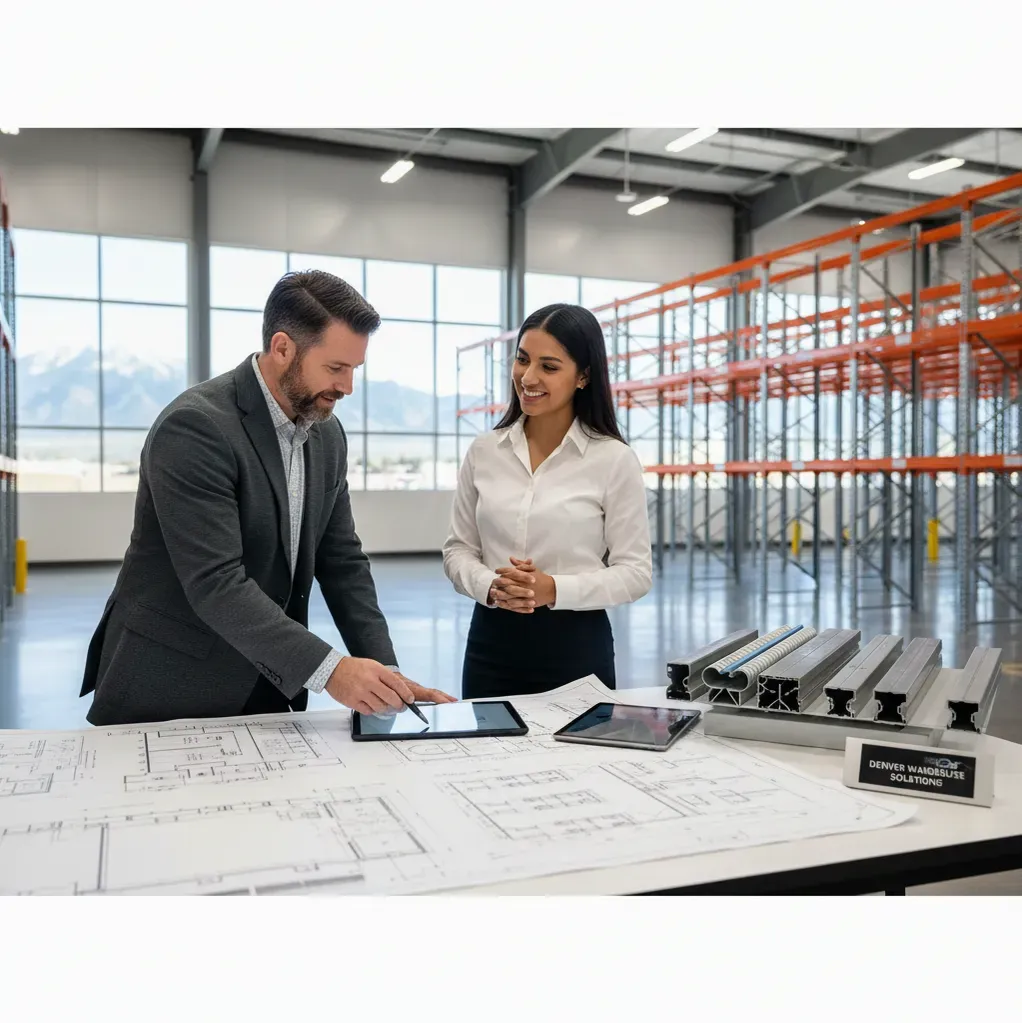
Getting Started with Pallet Racking in Denver
You’re getting started on a new pallet racking system for your Denver warehouse, maybe expanding operations, replacing worn-out racks, or squeezing more storage into tight space. You need clear answers fast—on costs, timelines, local codes, load capacities, and how it all fits your layout. Our crews field these questions daily from Aurora shops to Boulder distributors facing the same crunch.
We’ve installed thousands of feet of racking across the Denver Metro area, so we know exactly what trips people up. Below, our team shares straight talk on the top getting started questions. You’ll see why local expertise makes the difference.
Your Top Getting Started Questions Answered
How long does pallet racking installation take in a Denver warehouse?
Most getting started projects wrap in 2-5 business days because our crews tackle anchor bolt drilling and base plate leveling on day one using Hilti tools rated for seismic zone D under IBC codes. This front-loads the heavy work, so your forklifts stay running until the final upright load test, cutting downtime by 70% compared to piecemeal installs.
Do I need a permit for pallet racking in the Denver Metro area?
Yes, Denver requires building permits for systems over 8 feet tall or 4,000 lbs capacity per bay, because non-compliant racks fail under Colorado’s snow loads and trigger IBC seismic bracing rules. We pull permits through the Denver Fire Department in 48 hours flat—our licensed engineers stamp drawings upfront, so you avoid delays and inspector rejections that plague out-of-towners.
How do we calculate load capacity for my setup?
We start with your pallet specs—say, 4,000 lb GMA pallets—then factor beam deflection limits to L/240 per RMI specs, because exceeding that causes sagging and product damage over time. Uprights get upsized for Denver’s wind gusts, ensuring FM-approved stability that lets you stack higher without forklift tip-overs.
What’s the first step in getting started with warehouse layout design?
Our site visit measures flue spaces at 48 inches minimum from walls per NFPA 13 for sprinklers, because tight clearances block water flow and void insurance. We CAD your floor plan same day, spotting push-back or drive-in opportunities that double density without code violations.
You know pallets pile up fast. You deserve racks built to last through Colorado winters. Of course local crews handle permits right. That’s why you call us today.
Getting Started Cost Questions
How much does pallet racking cost per pallet position in the Denver Metro?
Selective pallet racking installs at $45-75 per pallet position, which means a typical 500-position system totals $22,500-$37,500 including uprights, beams, and wire decking. That investment recoups fully in 12 months by reclaiming 25-40% more floor space—especially valuable when Denver warehouse rents hit $12-18 per sq ft annually.
What factors drive up or down the total getting started price?
Your bay depth and height dictate costs because deeper drive-in racks add $10-15 per position for guide rails, while basic selective stays lean. Seismic bracing for Colorado codes upsizes beams by 20%, but our bulk material buys slash that premium. We optimize for your layout, dropping averages 15% below national quotes.
How quickly does pallet racking pay for itself?
New racks triple storage density, equaling $15K-$50K saved yearly on offsite storage or lost productivity—our Aurora client cut overflow trucking by 80% in month one. Properly loaded, they handle 4,000 lb pallets flawlessly, preventing $5K+ damage claims from sagging overloads.
How do I get an accurate getting started estimate?
Our free site visits measure your space in 60 minutes, then CAD quotes land in your inbox next day with exact bay counts and load calcs. No upfront fees, no obligations—just real numbers from crews who’ve priced 200+ Denver projects.
You handle high-volume pallets daily. You deserve pricing that stacks up fast. That’s why you call our team now.
Getting Started Safety and Compliance
Does pallet racking meet OSHA safety standards in Denver warehouses?
You realize a single overlooked anchor bolt fails under forklift impact, slashing stability by 40% per OSHA 1910.176 handling rules, which demand secure storage to prevent tip-overs. Picture pallets crashing down during a busy shift—our crews torque every bolt to 150 ft-lbs and add column guards, passing Denver inspections without rework.
How do you ensure seismic compliance for Colorado racks?
Notice how Denver’s zone D shakes test unbraced uprights, triggering IBC 1613 seismic design mandates that require base plates upsized 25% for lateral loads. We engineer cross-aisle bracing with FM Global 2-1 rated beams, so you see zero sway even in 7.0 quakes, protecting inventory and crews year-round.
What daily safety inspections do your systems need?
You understand damaged wire decking hides cracks that weaken under 4,000 lb loads, violating RMI MH16.1 specs for 2x safety factors. Feel the solid lock-in of our welded decks during walks—our post-install checklists spot dents fast, with repairs in hours to dodge $10K OSHA fines.
How far from walls and sprinklers for safe flue space?
Visualize blocked water flow turning a small fire into warehouse loss, as NFPA 13 codes enforce 18-inch flue voids for spray coverage. Our layouts position racks precisely, doubling density while crews verify clearances on-site, ensuring insurance stays intact through Colorado’s dry seasons.
You prioritize crew safety daily. You deserve racks that pass every audit. That’s why you get our estimate today.
Your Getting Started Path Forward
You run tight warehouse ops across Denver Metro. You deserve racks that boost capacity without headaches. Of course, local crews nail permits and installs right.
Picture your Aurora or Boulder facility stacked higher, forklifts moving faster through Colorado winters. Soon, you’ll reclaim 25% more floor space with zero downtime.
Our team delivers free site visits and quotes next day—right here in Denver for Lakewood, Arvada, everywhere nearby. That’s why you contact us now.